
Two avid campers share tips for camping with your dogs
Taking your dog camping is one of the most rewarding outdoor experiences you can share with your pet. Dogs are natural explorers — trails to sniff, sticks to chew, and lakes to swim in. Whether you’re planning your first trip with your pup or looking to make your next outing smoother, this guide covers everything you need to know: what to pack, how to prepare your dog, campground rules, safety tips, and answers to the most commonly asked questions about camping with dogs.
It can take a few trips for your dog to get used to camping. The first night, your dog may need extra reassurance in the tent, but after a few outings both of you will find your camping rhythm. As we compared notes with Kelly and her fur baby Khai (@azoutdoorsyduo), fellow avid campers there were alot of shared learnings. Kelly’s dog, Khai, took a few trips to discover the full joy of it — trails to sniff, sticks to chew, and lakes to swim in. The tips below will help you get there faster.
How to Prepare Your Dog for Camping
Before your first dog camping trip, a little preparation goes a long way. Start with these steps to set your dog up for success:
Set up the tent at home for a trial run. This lets your dog get comfortable with the tent before the trip. If you’re concerned about claw damage, lay a blanket on the tent floor.
Check the terrain and wildlife in the area. Knowing potential hazards — like Jumping Chollas in Arizona or prickly Foxtails in Oregon and California — keeps your dog safe from harmful plants.
Check the weather beforehand. Rain means muddy paws — plan ahead with extra towels or a dog paw cleaner like a Mud Buster. Hot weather means dog booties may be needed to protect paws from hot ground.
Pack your dog’s comfort items. Bring your dog’s favorite blanket or toys, especially for the first few trips. Familiarity helps them settle into a new environment. If they don’t use something over multiple trips, you can drop it from the list.
Make sure vaccinations and ID are current. Bring a copy of vaccination certificates, as some campgrounds require proof. Make sure your dog has an ID tag and is microchipped.
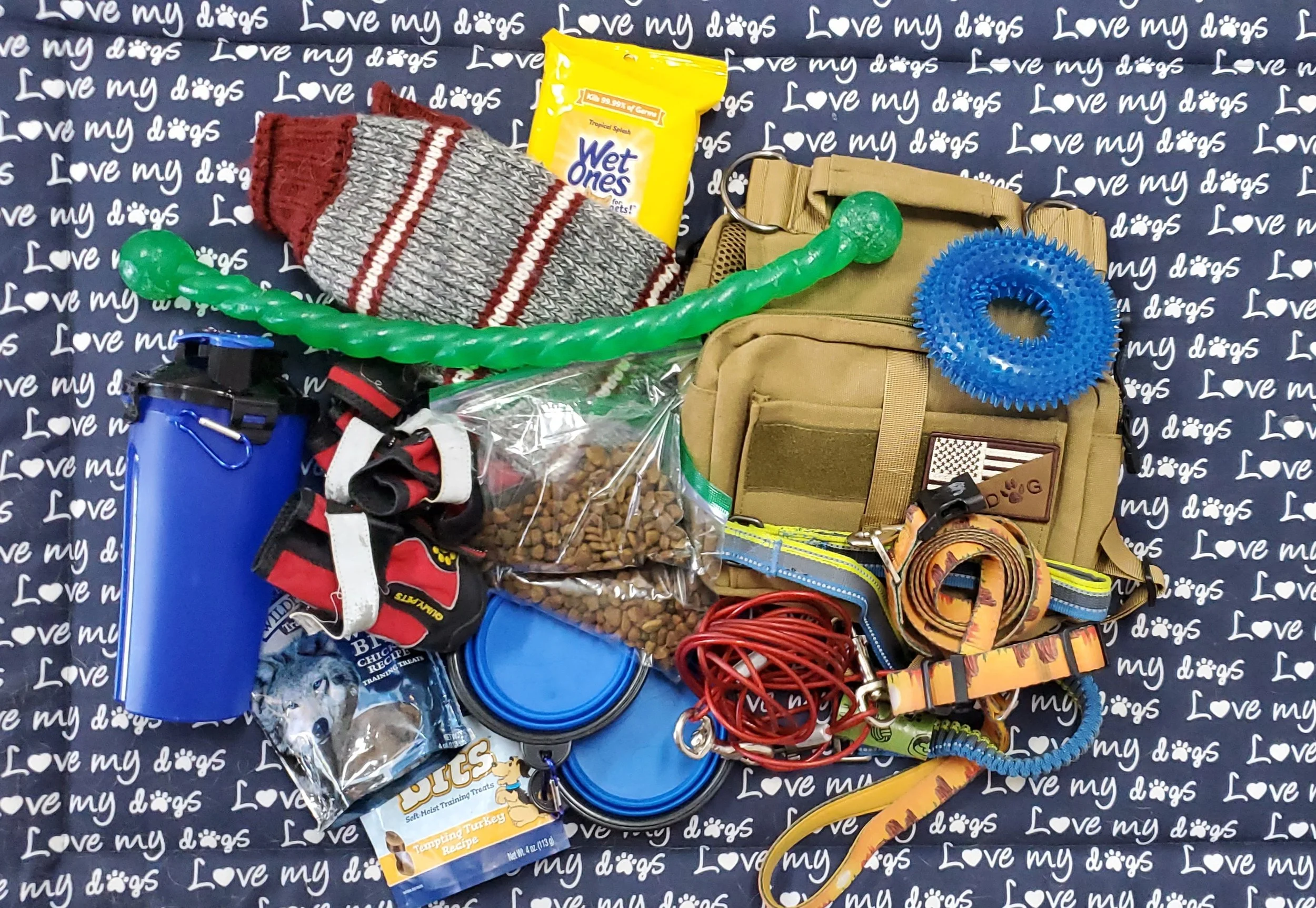
Camping essentials for dogs to pack
What to Pack for Camping with a Dog
Packing the right gear makes a huge difference. Here is a recommended dog camping packing list, organized by category:
Sleeping
Dog bed or blanket: After a few trips, you’ll know if your dog prefers sleeping on top of your sleeping bag or having their own bed and blanket in the tent
Familiar toy or comfort item from home
Eating and Drinking
Dog food and treats: Pack an extra couple of meals in case you extend your trip or something unexpected comes up
Two bowls: one for food, one for water
Extra water: Always bring more fresh water than you think you need, especially in hot weather or on hikes
Safety and Leash
Collar with identification tag: Make sure contact info is current in case your dog gets separated from you
Two leashes: a regular walking leash and a longer line for more freedom at the campsite. Most campgrounds require dogs to be on leash at all times
Safety lights for night: Helps other campers and cars see your dog in low light
First aid kit: Include basic wound care supplies. Hopefully you won’t need it, but it’s essential to have on hand
Printed photo with contact info: A safety backup in case your dog gets separated from you
Copy of vaccination certificates: Some campgrounds require proof of current rabies vaccination and other shots
Hygiene and Comfort
Poop bags: Always pack out your dog’s waste
Baby wipes or towel: Great for wiping muddy paws, drying off after water play, or a quick clean
Flea and tick prevention: Apply before the trip, especially if camping in wooded or grassy areas
Dog booties (optional): In hot climates like summers in Arizona where ground heat can burn paws, or rocky terrain the booties protect their paws
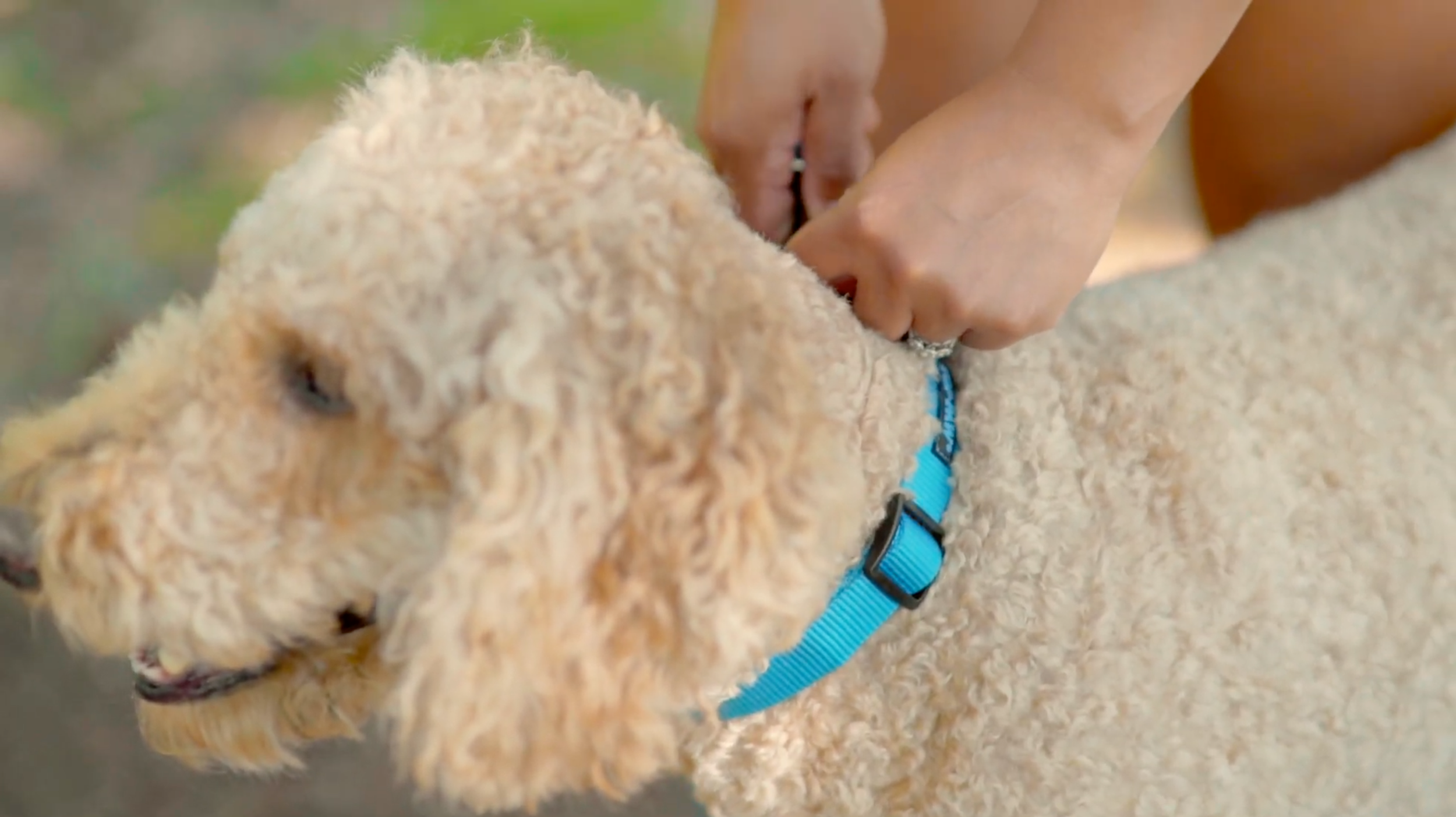
Pet parent putting dog on leash
Campground Rules for Dogs: What You Need to Know
Before booking your campsite, always check the campground’s pet policy. Rules vary widely, but these are the most common guidelines you’ll encounter:
Dogs must be on leash at all times: The majority of campgrounds require dogs to be kept on a leash of 6 feet or less whenever outside the tent or vehicle
Dogs must not be left unattended at the campsite: This is a safety rule for both your dog and neighboring campers
Vaccination proof may be required: Some campgrounds ask for rabies vaccination records at check-in
Breed or size restrictions may apply: Certain campgrounds, especially private ones, have restrictions on certain breeds or size limits
Pet fees: Some campgrounds charge a nightly or per-visit pet fee, so check ahead when booking
Always pick up after your dog: This is both a rule and a courtesy to fellow campers and the environment
Dog Camping Safety Tips
Keeping your dog safe at camp requires awareness of a few key hazards. Here is what experienced dog campers watch out for:
Wildlife encounters: Keep your dog on leash and close to you, especially at dawn and dusk when wildlife is most active. Snakes, porcupines, and coyotes are common camping hazards for dogs
Toxic plants: Research the plants in your camping area before you go. In Arizona, Jumping Chollas can attach to paws. In Oregon and California, prickly Foxtails can embed in paws and ears
Extreme heat: Dogs overheat faster than humans. Never leave your dog in a hot vehicle. Offer water frequently and take breaks in the shade on hot days. Dog booties protect paws from hot ground surfaces
Water safety: Not all natural water sources are safe for dogs. Avoid stagnant water, which may harbor harmful bacteria like blue-green algae. Bring your own fresh water supply
Ticks and fleas: Check your dog thoroughly after every hike. Apply flea and tick prevention before the trip and again as directed
Night safety: Use safety lights on your dog’s collar at night so other campers and vehicles can spot them easily
Where Should My Dog Sleep When Camping?
Most dogs sleep best inside the tent with their owner. Sleeping inside keeps them safe from wildlife, insects, and temperature drops at night. After a few trips, you will figure out what works best for your dog:
On top of your sleeping bag: Some dogs prefer to curl up next to or on top of their owner’s sleeping bag for warmth and closeness
On their own bed or blanket: Bring their familiar bed or a dedicated camp blanket for dogs who prefer their own space
In a dog crate: If your dog is crate trained, their crate can provide a sense of security and familiarity in an unfamiliar environment
How to Keep Your Dog Entertained While Camping
Dogs tend to thrive in the outdoors, but a tired dog is a happy dog at camp. Here are great ways to keep your dog engaged and content:
Hikes and trail walks: Dogs love exploring new scents on trails. Even a short hike before setting up camp will help your dog settle in for the night
Swimming: If your dog loves water, camping near a lake or river is a treat. Always supervise water activities and watch for currents
Fetch and free sniff time: A long sniff session in a safe grassy area is mentally stimulating for dogs and uses up just as much energy as physical exercise
Bring their favorite toys: A familiar toy helps dogs feel comfortable and gives them something to do while you are relaxing at the campsite
Training games: Short training sessions using treats are a great way to mentally tire a dog and reinforce good behavior around new distractions

Kelly and her fur baby Khai are avid campers
Frequently Asked Questions: Camping with Dogs
Is camping with a dog a good idea?
Yes, camping with a dog can be a wonderful experience for both of you. Dogs enjoy the fresh air, new smells, and physical activity that camping offers. With the right preparation, most dogs adapt quickly and become enthusiastic camping companions. It may take a trip or two for your dog to find their camping groove, so be patient on the first outing.
What do I need to bring camping with a dog?
The essential items to bring camping with a dog include: food and extra meals, two bowls (food and water), extra water, a leash, collar with ID tag, poop bags, a first aid kit, a bed or blanket, copy of vaccination records, safety lights for night, flea and tick prevention, and any comfort items like a favorite toy or familiar blanket. See the full packing list above for details.
Do campgrounds allow dogs?
Many campgrounds allow dogs, but policies vary. Always check the specific campground’s pet policy before booking. Most require dogs to be on a leash at all times, not left unattended, and kept quiet so as not to disturb other campers. Some campgrounds charge a pet fee or have breed and size restrictions. National parks generally allow dogs in campgrounds but may restrict them from trails.
How do I keep my dog safe while camping?
To keep your dog safe while camping, always keep them on leash around wildlife, research local hazardous plants before your trip, apply flea and tick prevention, bring a first aid kit, ensure they stay hydrated, use safety lights at night, avoid stagnant water sources, and never leave them unattended. Having a current ID tag and a printed photo with your contact info are also important safety backups.
Can you take a puppy camping?
Yes, you can take a puppy camping, but it requires extra care. Puppies need to be fully vaccinated before exposure to outdoor environments and other animals. They are also more easily overwhelmed by new stimuli, tire quickly, and need more frequent potty breaks. Start with shorter, simpler overnight trips close to home. Building up gradually gives puppies the chance to develop confidence around camping without too much stress.
How do dogs do sleeping in a tent?
Most dogs do well sleeping in a tent once they get used to it. The first night can be unsettling for some dogs as new sounds and smells can be stimulating. A familiar blanket or toy can help them settle. Over a few trips, most dogs learn to love the coziness of sleeping in the tent. Set up your tent at home before the trip to give your dog a chance to sniff it out and feel comfortable before you are actually camping.
What are the best tips for first-time dog camping?
The best tips for first-time dog camping are: choose a dog-friendly campground close to home so you can leave easily if needed, do a tent trial run at home first, bring comfort items from home, apply flea and tick prevention before the trip, pack more food and water than you think you need, keep your dog on leash at all times, tire them out with a walk or hike before bedtime, and be patient. The first trip is always an adjustment for both of you. Camping with your dog gets easier and more enjoyable each time you go out.
