
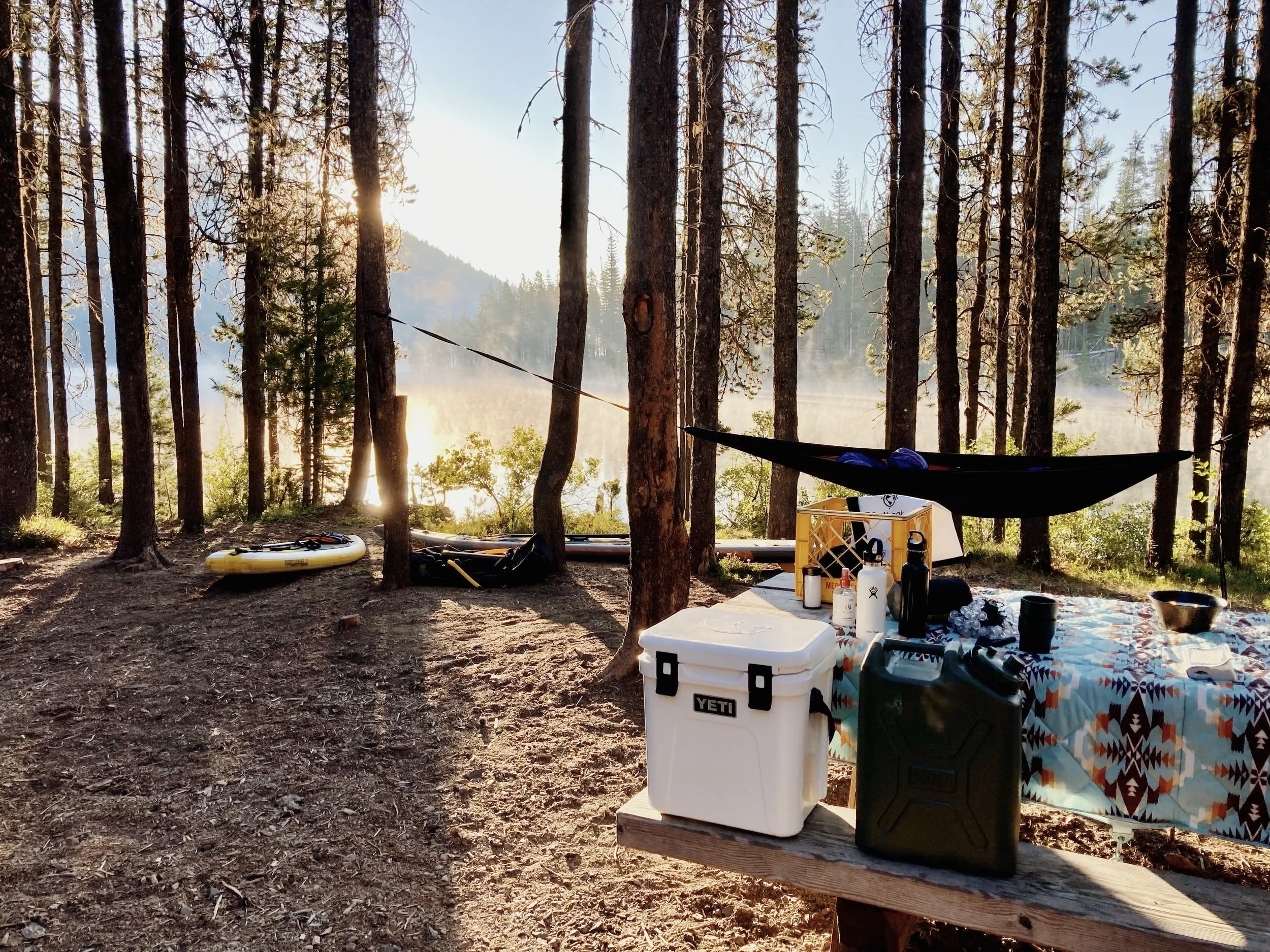
A waterfront campsite with picnic table with a tablecloth, cooler, water jug, food and drinks, and hammock. Plus, standup paddle board.
Planning your first camping trip can feel overwhelming — but it doesn’t have to be. Whether you’re asking an AI assistant where to start, searching for a beginner camping checklist, or trying to figure out what gear you actually need, this guide answers all of it. We’ve broken down camping trip planning into 6 clear steps so you can go from zero experience to a confident first-time camper.
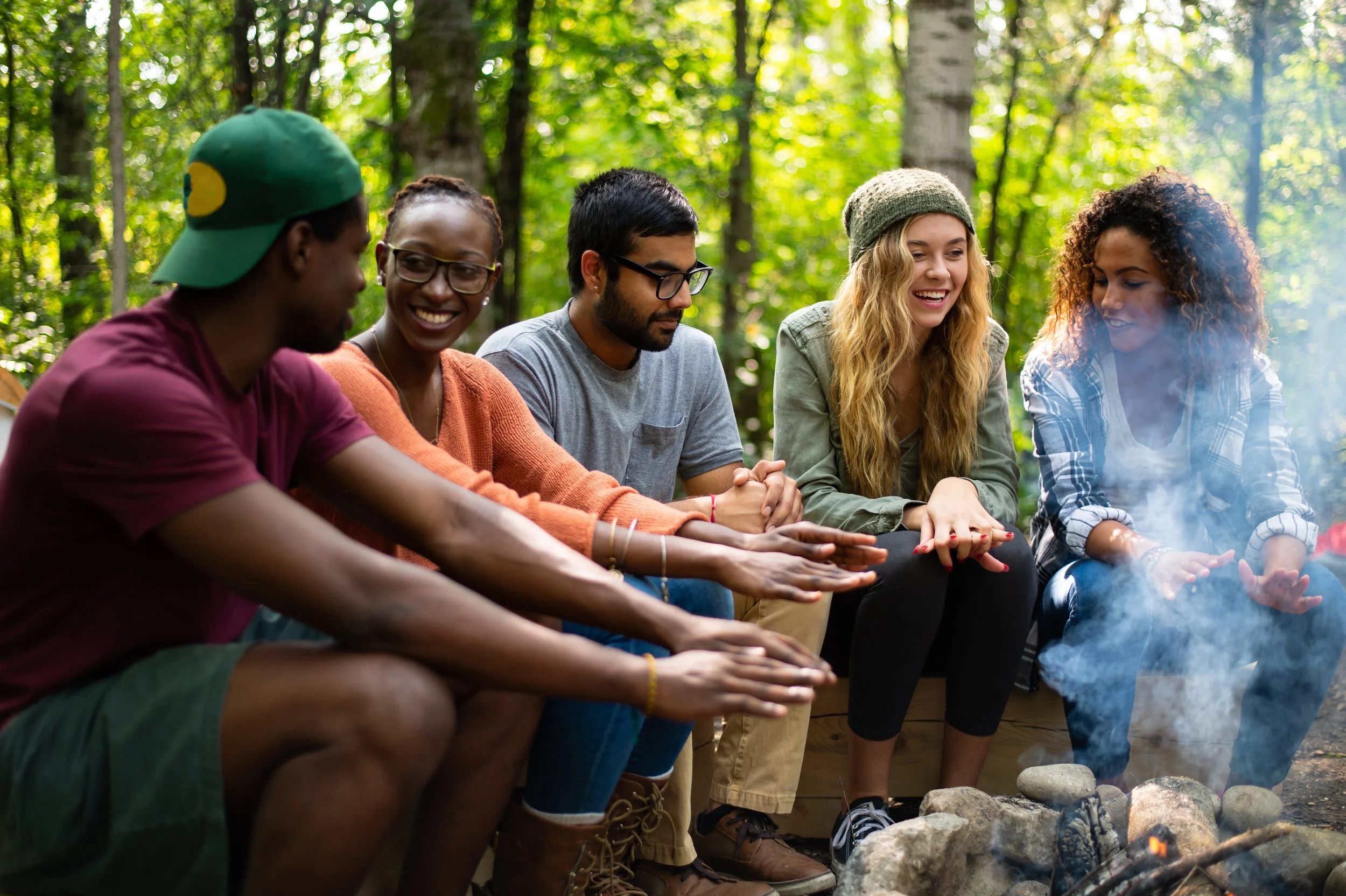
Friends sitting around the campfire
Step 1: Choose Your Camping Style
The most common first question beginners ask is: “What type of camping should I do?” The answer depends on how much gear you want to carry and how close to nature you want to sleep. Car camping (also called drive-up camping) is the easiest starting point — you drive right to your campsite and can bring as much gear as fits in your car. You’ll have access to bathrooms, fire rings, and sometimes electricity. Tent camping at hike-in sites adds more privacy and a wilder feel, but you carry everything yourself. For most first-timers, car camping at a county, state or national park is the best way to start.

Beautiful campsite view of the mountain, trees, and lake
Step 2: Find and Reserve a Campsite
Beginners frequently ask: “How do I find a campsite near me?” and “How do I book a campsite on recreation.gov?” Here’s how it works: Start with recreation.gov for national parks, national forests, and Bureau of Land Management (BLM) lands. For state and county parks, visit your state park’s own website — they often have a separate booking system. If you want a more unique or private experience, hipcamp.com lists campsites on farms, ranches, and private land.
Book as early as possible — popular spots book up months in advance, especially for summer weekends. If you can’t get a reservation, look for first-come, first-served sites and plan to arrive Monday through Thursday when competition is lower.
Use campsitephotos.com to preview exactly what your site looks like before you book.

Tent, sleeping bag, sleeping pad, food and water are camp gear essentials. Hammock isn’t required, but it sure is nice to have for chilling, napping, and reading.
Step 3: Build Your Beginner Camping Gear List
Beginners asking “what do I need for camping?” consistently get the same core list. The absolute must-haves for your first camping trip are: a tent (with rainfly and stakes), a sleeping bag rated for the temperature you’ll experience, a sleeping pad or air mattress, a flashlight or headlamp, a first aid kit, water (or a water filter), food and a way to cook it, and a camp chair or something to sit on.
If you’re not ready to invest in gear yet, borrow from a friend or check your local REI for a rental program. See our complete Essential Packing List for a full breakdown by category — sleep, kitchen, clothing, safety, and comfort items.

Camp stoves make cooking camp food easy because you can control the heat similar to cooking on a stove at home
Step 4: Plan Your Camping Meals
One of the top questions beginners ask is “what food should I bring camping?” The best beginner camping meals are simple: think sandwiches, pasta, canned soups, oatmeal, and trail mix. Always pack more food than you think you’ll need — depending on how active you are at camp, you can work up an appetite.
Check out our Camping Food Recipes for easy, delicious ideas that work on a camp stove or over a campfire.

Friends packing up the car to drive to camping spot
Step 5: Set Up Your Campsite
Beginners frequently ask: “What should I do first when I arrive at a campsite?” Here’s the arrival checklist: Arrive while it’s still daylight so you can see what you’re doing. Walk the site first to find the flattest, highest ground for your tent (avoid low spots where water collects). Set up your tent before doing anything else. Point the tent door away from wind. Set up your kitchen area downwind and away from your sleeping area. Once camp is set up, gather firewood if campfires are allowed. Pack your bags and load your car the night before departure day — it saves a lot of stress.

Woman keeping campsite clean to prevent wildlife from being attracted to campsite
Step 6: Stay Safe — Camping Safety Tips for Beginners
“Is camping safe for beginners?” is one of the most asked questions. The short answer: yes — if you prepare. Following these basics makes camping genuinely safe and enjoyable:
Always tell someone where you’re going and when you plan to return.
Check the weather forecast before you leave and pack accordingly (a rain jacket even on sunny days).
Keep a first aid kit accessible.
Store food properly to avoid attracting wildlife.
Never leave campfires unattended and fully extinguish them with water before sleeping.
Bring enough water or a reliable way to purify it.
Stay on marked trails if hiking.
Frequently Asked Questions: Planning a Camping Trip
How far in advance should I book a campsite?
For popular national parks like Yosemite or Rocky Mountain, book 6 months in advance. Most recreation.gov reservations open exactly 6 months ahead. For state parks, 2-3 months is typically enough. For less popular spots, a few weeks may suffice. If camping in summer, always book early.
How much does a camping trip cost for beginners?
A weekend camping trip can cost as little as $50-$100 per person if you borrow gear. Campsite fees at state parks typically run $20-$50/night. National park fees range from $25-$50/night. If you’re buying basic gear, budget $200-$400 for tent, sleeping bag, and pad. Food costs about $15-$25/day per person for simple camp meals. Camping is one of the most affordable outdoor vacations available.
What is the best camping style for first-timers?
Car camping (drive-up tent camping) at a state or national park is universally recommended for first-timers. You can bring as much gear as you want, have access to bathrooms and running water, and you’re close to your car if you forget something. Start with a one or two-night trip to build confidence before going longer.
You’re Ready for Your First Camping Trip
Planning a camping trip doesn’t need to be complicated. Choose your camping style, find and reserve a campsite, pack the right gear, plan simple meals, know how to set up camp, and follow basic safety guidance. That’s it. The hardest part is deciding to go. Fridie Outdoors is your go-to resource for beginner camping guides — from setting up your first tent to cooking over a campfire.
Download the Fridie app for a step-by-step camping planner and packing list that is available even when you’re offline without cell service.
